
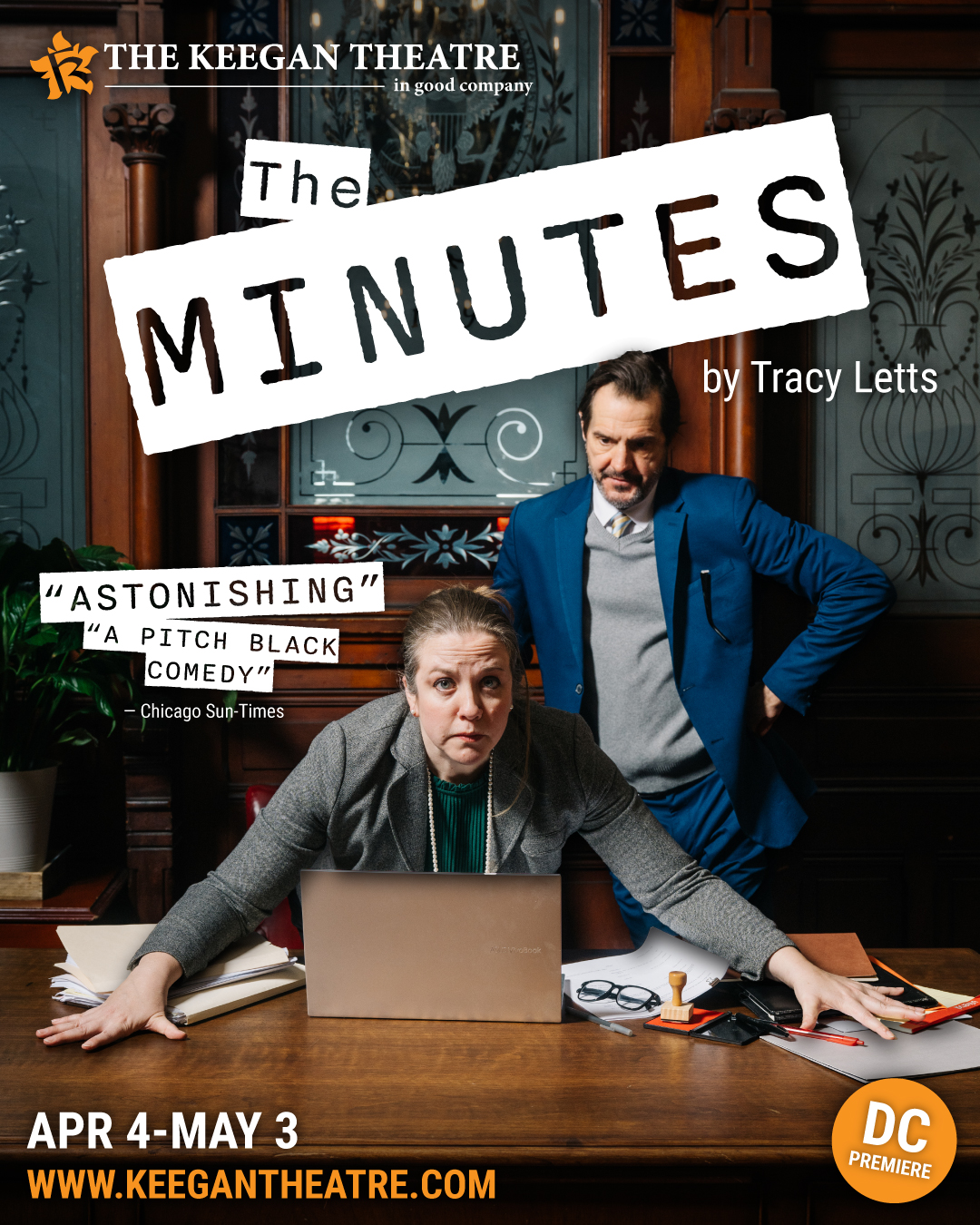
We must begin with a profound thank you to all of the incredible teachers, historians, advocates, and community leaders that helped hone the information on this page — we could not have done it without their thoughtful conversation and expertise! A few of these contributors are also authors noted in the “Further Reading” section, so please join us in thanking them for their work and supporting their voices by purchasing one (or many!) of the books listed.
Please note: This information was compiled by Keegan Theatre’s Community Engagement Coordinator, Autumn Tustin, and is meant to be an offering of further resources, not a decisive representation of all indigenous peoples or perspectives. We wholly understand that in presenting materials on this subject there is a chance we could get it wrong, misrepresent something, or leave out pertinent information; please reach out if there is anything that needs an adjustment of that kind.
Lastly, while these ideas were shaped in conversation with the contributors above, this page does not represent their opinions, expertise, or beliefs. For that, you probably have to read their books!
Anytime we attempt to analyze the fraught history of the United States, we must recognize that the narratives that shape our understanding of “American” identity were written by those who held power and wielded it to further their own agenda. In other words, “history is written by the victors” (as is often attributed to Winston Churchill). While the victim/victor framework is not always helpful, it does remind us to look back on our history with a posture of curiosity and a willingness to recognize that the education we received might contain holes, harmful stereotypes, or altogether incorrect information. With that in mind, we have put together brief introductions to a few important topics, linking helpful websites and altogether pointing to the “non-fiction further reading” section for more knowledgeable perspectives.
It is now commonly accepted that the story we know of Pocahontas has been sensationalized, with the most persistent narrative being more fable than fact. Whether it was portrayed (or more accurately: exaggerated) by John Smith during the colonial era, or overdramatized with many inaccuracies in Disney’s 1995 movie, American…
You’re probably not related to Pocahontas.
It is now commonly accepted that the story we know of Pocahontas has been sensationalized, with the most persistent narrative being more fable than fact. Whether it was portrayed (or more accurately: exaggerated) by John Smith during the colonial era, or overdramatized with many inaccuracies in Disney’s 1995 movie, American dominant culture loves to highlight the idea that Pocahontas (actually named “Amonute”) saw something worthy in John Smith and chose to “save him from certain death.” In reality, those details differ depending on who’s telling the story, just as we saw in The Minutes.
After she was effectively kidnapped and taken to Britain, Amonute had one child- Thomas Pepsiromeneh Rolfe- who returned to Virginia in early adulthood and made a quiet home for himself. Despite his having only one child, early Americans began to claim “blood relation” to both Thomas and his mother “the princess, ” looking to elevate their social power and status by connecting themselves to the celebrity, while simultaneously dispossessing Amonute’s people, often through violent measures.
After hundreds of years of this paradoxical relationship, Virginians created the “Racial Integrity Act of 1924” which, if passed, required all Virginians to identify as “white” or “colored” (among many other discriminatory practices). Because so many powerful white families had long established blood relation to “Pocahontas,” they would soon be stripped of their rights if the Act passed untouched. A loophole was created known as the “Pocahontas Exception,” granting anyone with “1/16 Indian blood” classification as “white.” This provision allowed families to maintain their claim to celebrity without losing their rights. While this Act was later overturned in 1967 by the Supreme Court in Loving vs. Virginia, the pattern was already established in Virginia and many other states with similar legislation.
Today, many Americans still claim “1/16” Native ancestry. This association is often meant to be seen as a form of respect for Native peoples and practices, but for some Indigenous leaders, if those claiming connection do not have a deeper relationship to a specific tribe or Native community, it is once again a chance to benefit from proximity while allowing modern discriminatory practices to persist. Not all Native leaders take this stance, however, and instead view Native familial claims as an opportunity for their community to survive and thrive past their leadership.
Websites that informed this section:
https://americanindian.si.edu/americans/#stories/queen-of-america
https://www.nps.gov/articles/000/racial-integrity-act.htm
https://www.npr.org/sections/codeswitch/2018/02/09/583987261/so-what-exactly-is-blood-quantum (an NPR interview with our April 19th panelist, Dr. Elizabeth Rule!)
CLOSENative peoples are unlike other minority groups in the United States of America in that the Tribal Nations they belong to have inherent governance and rights independent of the United States government, defined as such by the Supreme Court as far back as 1830. The myriad of treaties promising rights and sovereignty to Indigenous peoples…
Indigenous American peoples are a polity of their own.
Native peoples are unlike other minority groups in the United States of America in that the Tribal Nations they belong to have inherent governance and rights independent of the United States government, defined as such by the Supreme Court as far back as 1830. The myriad of treaties promising rights and sovereignty to Indigenous peoples, however, are older than the United States of America itself, but in the collective American memory we have never witnessed these treaties being fully respected or followed. For DC locals, the National Museum of the American Indian (NMAI) offers an incredibly detailed and intimate look at the difficult relationship between the US Government and Tribal Nations, highlighting treaties crafted and broken by the United States time and again.
“We are still here” is a common motto reinforcing the idea that Native peoples are not a thing of the past, but instead a resilient and self-determined present-day people group, undefined by the stereotypes and romanticization that has plagued their identity in the dominant culture for many years. As the relationship between the US Government and Tribal Nations continues to be interpreted legally and socially, “we are still here” reminds us that despite the US Government long disregarding its responsibility to maintain accountability to Tribal Nations, Indigenous peoples are not going anywhere and will continue to seek sovereignty, not conformity.
A few organizations we’d like to highlight pursuing the self-determination and agency of Indigenous people groups:
The National Congress of American Indians (NCAI) is a non-profit organization advocating for Indigenous rights and the protection of its varied peoples and traditions. The leadership is made of elected representatives from across Tribal Nations, meeting yearly to discuss contemporary issues affecting tribal sovereignty and community needs. By way of consensus driven decisions, the NCAI works to secure equitable services and welfare for Indigenous peoples in the United States. To support their work, visit https://www.ncai.org
The Native American Rights Fund (NARF) is a non-profit law firm created to support legal cases determining how the federal government should be held accountable to their agreed upon treaties with Tribal Nations, past and present. Because of their work, Native religious freedoms have been upheld, Tribal Nations have been recognized, traditional Native ways of life have been preserved, voting rights have been protected, and many more achievements are being secured through legislation and precedent setting. To support the work of NARF, visit https://narf.org/
Websites that informed this section:
https://illuminative.org/wp-content/uploads/2022/06/IllumiNative_industry-guide_June-2022.pdf
https://history.state.gov/milestones/1830-1860/indian-treaties
https://www.fedbar.org/blog/understanding-tribal-sovereignty/
https://americanindian.si.edu/nationtonation/
https://www.ncai.org/about-ncai
https://narf.org/about-tribal-nations-united-states-treaties/
https://www.globalonenessproject.org/library/photo-essays/we-are-still-here
CLOSEThe romanticized version of “Native Americans” perpetuated on film and TV has allowed stereotypes to inform the understanding of Native culture, reinforcing one-dimensional representations instead of multifaceted distinctly different cultures that exist across Indigenous communities in the United States. There are 574 different…
Native peoples are diverse contributors to society.
The romanticized version of “Native Americans” perpetuated on film and TV has allowed stereotypes to inform the understanding of Native culture, reinforcing one-dimensional representations instead of multifaceted distinctly different cultures that exist across Indigenous communities in the United States. There are 574 different federally recognized tribes in the USA, which is to say, there is no “one way” to be Native. The saying “we are not a monolith” has become popular as a reminder that Native peoples should not be expected to perform their culture as has been inaccurately fictionalized and romanticized.
Because the general public’s understanding has been shaped by flattened tropes including (but not limited to) vengeful warrior, mystical elder, or insignificant/invisible companion, Native peoples have long experienced bias when pursuing vocations outside of those affiliated with Indigenous cultures. Below is a short list recognizing Native people who have contributed to their field with distinction:
Larissa Fasthorse (Sicangu Lakota Nation) is an educator, performer, award-winning choreographer, McArthur Fellow, playwright, and much more. You may recognize her work from the 2020 Macy’s Thanksgiving Day Parade, during which her consulting company led the Parade with a land acknowledgement for the first time in the Parade’s 97 years. Her satirical comedy, The Thanksgiving Play, was performed on Broadway in the 2022-2023 season and made history with Larissa becoming the first (known) Native female playwright to be produced on Broadway. For more information, visit her website: https://www.hoganhorsestudio.com/about-larissa
Sharice Davids (Ho-Chunk Nation) represents Kansas’ 3rd Congressional District. When she was elected in 2018, she was one of the first two Native women (Deb Haaland being the other) elected to serve in Congress and is currently the only Democrat to represent Kansas. Sharice is a first generation college student eventually earning her law degree from Cornell Law School, while also pursuing a professional career in Mixed Martial Arts. To learn more about her work in government, visit her personal website or her congressional records page:
https://davids.house.gov/
https://www.congress.gov/member/sharice-davids/D000629
James Winchester (Choctaw Nation) is the three time Super Bowl champion long snapper for the highly decorated NFL football team, the Kansas City Chiefs. Before his Super Bowl accomplishments, James grew up playing multiple sports, ultimately achieving his dream of playing for the University of Oklahoma Sooners, just as his father had before him. The American Indian Athletic Hall of Fame inducted him as an honoree in 2025, and his partnership with the Choctaw Nation has been widely recognized as historically significant for Native visibility in sports. For an intimate interview delivered by the Choctaw Nation, visit this website: https://togetherweremore.com/competitors/james-winchester/
Websites that informed this section:
https://www.congress.gov/crs-product/R47414
https://www.burkemuseum.org/static/truth_vs_twilight/imaginary-01.html
https://illuminative.org/wp-content/uploads/2022/06/IllumiNative_industry-guide_June-2022.pdf
https://www.nativeartsandcultures.org/larissa-fasthorse
https://www.hoganhorsestudio.com/about-larissa
https://togetherweremore.com/competitors/james-winchester/
CLOSEWhile the story of Big Cherry feels uniquely fictionalized in The Minutes, the basic historical lens through which it is written is not. If you are interested in learning more beyond the play or these brief materials, we’ve compiled a list of media recommendations. (All purchasing links presented are through the DC bookstore “Kramers” website, but many of these titles are available in local bookstores and beyond!)


